
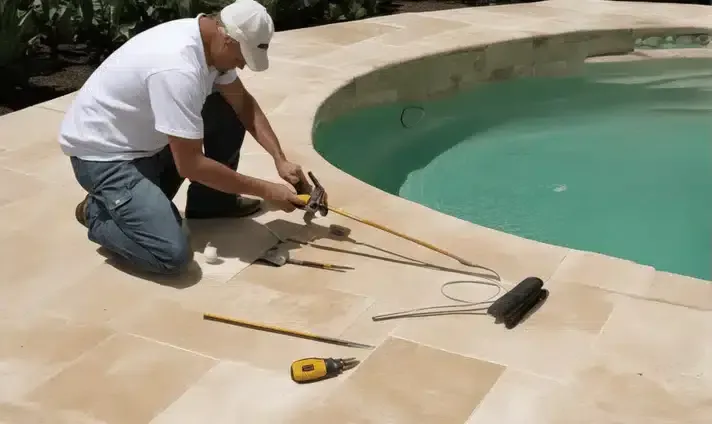
Travertine Pool Maintenance Tips in Destin & Surrounding Areas
Travertine pool maintenance tips in Destin are essential for keeping pool areas clean, safe, and visually appealing throughout the year. Travertine is a popular choice around pools because of its natural look, slip resistance, and ability to stay cooler under the sun. However, exposure to salt, chlorine, moisture, and Florida weather can cause wear if the surface is not properly maintained. Regular cleaning helps prevent staining, algae buildup, and surface dullness. Sealing the stone at the right intervals protects it from water absorption and long-term damage. Homeowners who follow consistent care routines often extend the life of their pool deck while maintaining its original beauty. Proper maintenance also improves safety by reducing slick areas and surface breakdown.
Why does travertine require special care around pools?
Travertine is a porous natural stone that can absorb water and pool chemicals if left unprotected. This can lead to discoloration and surface erosion over time. Sealing and gentle cleaning help preserve the stone’s appearance. Many homeowners coordinate care with Deck & Patio Construction to maintain uniform outdoor surfaces.
How often should travertine pool surfaces be cleaned?
Light cleaning should be done weekly to remove dirt, sunscreen residue, and organic debris. Deeper cleaning may be needed seasonally depending on usage and weather. Using the correct cleaners prevents damage. Consistent care keeps the surface looking fresh.
What type of cleaner is safest for travertine pool decks?
pH-neutral cleaners designed for natural stone are the safest option. Acidic or harsh cleaners can etch the surface and weaken the stone. Soft brushes are preferred over pressure washing. This approach protects long-term durability.
How can staining be prevented on travertine near pools?
Sealing the stone helps block moisture and chemical penetration. Promptly rinsing spills and debris reduces stain risk. Regular inspections catch early discoloration. Many property owners apply similar care methods used for Brick Pavers (Driveway) to maintain surface consistency.
Does sealing travertine improve safety around pools?
Yes, sealing helps maintain the stone’s texture and prevents surface breakdown that can create slippery areas. A properly sealed surface supports traction. This improves safety for bare feet. Sealing also extends the life of the stone.
Can algae or mold grow on travertine surfaces?
Yes, shaded and damp areas can encourage algae or mold growth. Routine cleaning and proper drainage help prevent buildup. Addressing growth early avoids staining. These practices are similar to maintenance used for Brick Pavers (Patio).
How does foot traffic affect travertine pool areas?
High foot traffic can wear down sealant and increase surface exposure. Entry points and walkways often show wear first. Monitoring these areas helps plan resealing. Care routines similar to Brick Pavers (Walkways) maintenance are often effective.
Is pressure washing safe for travertine pool decks?
High pressure can damage the stone and strip protective sealers. Low-pressure rinsing is safer when needed. Gentle methods protect the stone’s natural finish. Professional guidance helps avoid costly mistakes.
How does Destin’s climate impact travertine maintenance?
Humidity, salt air, and frequent rain can accelerate wear and staining. Regular inspections are important in coastal environments. Preventive care reduces weather-related damage. Maintenance planning helps preserve appearance year-round.
When should professional maintenance be considered?
Professional care is helpful when staining, surface damage, or uneven wear becomes noticeable. Experts can deep clean and reseal properly. This restores appearance and performance. Many homeowners follow similar schedules used for Brick Pavers (Sidewalks).
Final Thought
Travertine pool maintenance in Destin focuses on protecting natural stone from moisture, chemicals, and daily use. With regular cleaning, sealing, and inspections, homeowners can preserve both safety and appearance. Consistent care helps travertine surfaces remain attractive and functional for years.

How long does travertine sealing usually last?
Most sealers last one to two years depending on exposure and foot traffic.
Can travertine crack from temperature changes?
Sudden temperature shifts can cause stress, but proper installation and care reduce risk.
Is travertine slippery when wet?
Travertine generally provides good traction, especially when properly sealed.
Should furniture pads be used on pool decks?
Yes, pads help prevent scratches and surface wear from outdoor furniture.
Can damaged travertine be repaired?
Minor chips and surface issues can often be repaired by professionals.
Email: [email protected]
Phone: 956-952-7322
Address: 3999 Commons Drive, Destin, FL 32541